
Testing Services

Choose from analytical, quality, microbiology and characterisation services for research compounds, raw materials and finished products.

Testing scope

Start with the type of sample

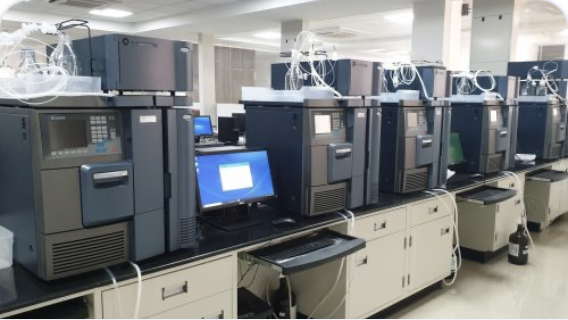
Chromatography instruments
Research

Research Compounds

Identity, purity, quantity and targeted safety checks.
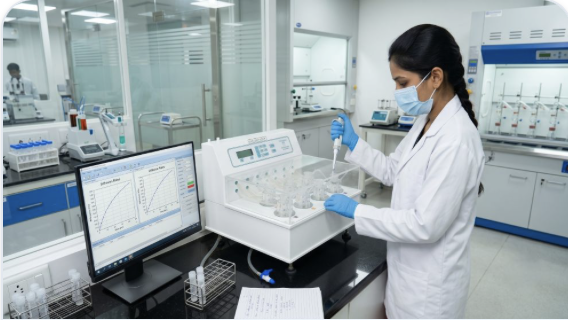
Analyst working with a sample
Materials

Raw Materials & APIs

Testing against agreed monographs or specifications.
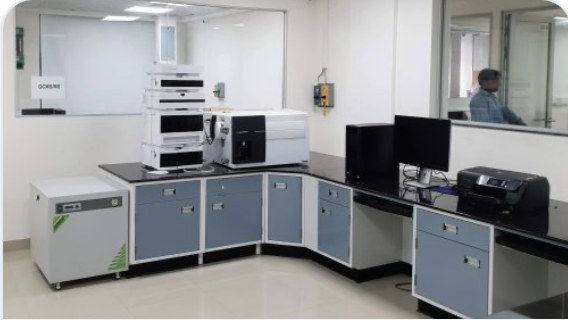
Pharmaceutical quality laboratory
Products

Finished Products

Release, stability and product-performance support.

Complete testing menu

Click any service for full details

Each panel explains the typical scope, information required and indicative timeline. The final method, acceptance criteria and sample quantity are confirmed after review.

01

Analytical Testing

Method development, identity, assay, composition and volatile analysis.

Analytical DevelopmentDevelop a suitable procedure for a new analyte or matrix.

Analytical development establishes a practical method before formal validation or routine testing. The programme may include technique selection, column and solvent screening, selectivity optimisation and preliminary qualification.

Typical scope

  • HPLC or UHPLC method development
  • LC-MS/MS methods for trace-level work
  • GC or GC-MS methods for volatile compounds
  • Forced degradation and stability-indicating methods
  • Method transfer with equivalence assessment

Information to provide

  • Analyte and sample matrix
  • Dosage form and concentration range
  • Required sensitivity and acceptance criteria
  • Existing methods and reference standards
Indicative timeline 2–3 weeks for a routine method; 3–5 weeks with forced degradationMethods HPLC, UHPLC, LC-MS/MS, GC or GC-MS
Method Development & ValidationDocument that an analytical procedure is fit for its intended use.

Development identifies suitable operating conditions. Validation then evaluates relevant characteristics such as specificity, linearity, range, accuracy, precision, detection or quantitation limits, robustness and system suitability.

Programme options

  • Development of a new procedure
  • Full validation of an established method
  • Combined development and validation
  • Abbreviated validation for a compendial method
  • Method transfer or revalidation after change

Project inputs

  • Method purpose and product stage
  • Draft procedure or pharmacopoeial method
  • Specification and reporting requirement
  • Reference standards and sample batches
Indicative timeline 2–4 weeks per phase; 6–8 weeks for a combined packagePlanning basis Project-specific validation protocol
HPLC / UHPLC TestingAssay, purity, related substances and content uniformity.

Chromatographic testing separates and quantifies components in drug substances and products. The method may be pharmacopoeial, client-supplied or developed for the project.

Common applications

  • Assay and potency
  • Related substances and degradation products
  • Content uniformity
  • Dissolution sample analysis
  • Chiral or size-exclusion work where applicable

Information to provide

  • Material and specification
  • Method and column details
  • Expected concentration range
  • Reference standard availability
Indicative timeline 5–7 working days for an established methodDetection Selected according to the method and analyte
LC-MS Identity ConfirmationMass-based confirmation for research compounds and materials.

LC-MS combines chromatographic separation with mass detection. It is useful when the expected molecular mass is known and a suitable ionisation and detection approach can be established.

Typical scope

  • Expected-mass confirmation
  • Targeted compound screening
  • Trace impurity investigation
  • Comparison with a reference material

Required information

  • Compound name and molecular formula
  • Expected molecular mass
  • Sample matrix and concentration
  • Reference standard, where available
Timeline Confirmed after analyte and method reviewMethod LC-MS or LC-MS/MS, as appropriate
Deformulation & Reverse EngineeringInvestigate product composition and performance attributes.

A deformulation project combines complementary techniques to understand active content, excipients and selected physical or performance characteristics. The scope is defined around the development or comparison question.

Possible workstreams

  • Active ingredient quantitation
  • Excipient and polymer identification
  • Coating or dosage-form assessment
  • Reference-product comparison
  • Formulation recreation support

Project inputs

  • Product type and intended comparison
  • Reference or comparator samples
  • Known formulation information
  • Priority attributes and reporting need
Indicative timeline 10–15 working days; complex recreation work may require 2–4 weeksApproach Multi-technique analytical investigation
VOC & Residual SolventsIdentify and quantify volatile compounds in pharmaceutical materials.

Volatile testing is selected according to the sample matrix and target compounds. Headspace introduction is commonly used for APIs, excipients and solid dosage forms.

Typical scope

  • Residual-solvent panels
  • Targeted Class 1, 2 or 3 solvent analysis
  • Benzene or other specified VOCs
  • Packaging or product-emission investigation
  • Custom volatile-method development

Required information

  • Material and manufacturing solvents
  • Target compounds and limits
  • Sample matrix and expected levels
  • Applicable method or specification
Indicative timeline 5–7 working days for an established panelMethods Headspace GC, GC-FID or GC-MS
02

Quality & Product Testing

Incoming material, development-batch and finished-product programmes.

Raw Material TestingIdentity, purity and quality checks for APIs and other materials.

The test panel is selected from the applicable monograph, client specification and known material risks. Full or selected testing can be agreed.

Possible tests

  • Identification and assay
  • Related substances
  • Moisture or water content
  • Residual solvents and elemental impurities
  • Microbial limits and physical properties

Information to provide

  • Material name, grade and supplier
  • Pharmacopoeial or in-house specification
  • Required tests and batch count
  • Certificate and method documents
Indicative timeline 5–7 working days; comprehensive characterisation may require 7–10 daysSample Quantity confirmed from the selected panel
Excipient TestingIdentity, chemical, physical and microbiological properties.

Excipient testing supports incoming release, supplier qualification and formulation development. The panel depends on the excipient's function and applicable specification.

Typical scope

  • Identity and assay
  • Water content or loss on drying
  • Residual solvents or elemental impurities
  • Microbial limits
  • Function-related physical properties

Materials

  • Diluents and binders
  • Disintegrants and lubricants
  • Coating materials and polymers
  • Preservatives and solubilisers
Indicative timeline 5–7 working days; full compliance panels may require 7–10 daysBasis Applicable monograph or client specification
Finished Product TestingQuality-control testing selected for the dosage form.

A finished-product panel is built around the dosage form, specification and batch-release or development purpose.

Common tests

  • Description, identity and assay
  • Content uniformity
  • Dissolution or disintegration
  • Related substances and moisture
  • Microbiological quality
  • Dosage-form-specific physical tests

Dosage forms

  • Tablets, capsules and granules
  • Liquids and suspensions
  • Injectables and lyophilised products
  • Topical, inhalation or transdermal products
Indicative timeline 7–10 working days; sterile-product panels require longerSample Product and batch quantity confirmed at quotation
Dissolution TestingRelease profiles for oral and other relevant dosage forms.

The apparatus, medium, speed, sampling points and analysis method are selected from the applicable monograph or development protocol.

Capabilities

  • Routine single-point release testing
  • Multi-point dissolution profiles
  • Comparison of product profiles
  • Immediate and modified-release forms
  • Method development support

Project inputs

  • Dosage form and strength
  • Dissolution method and specification
  • Number of units and batches
  • Analytical finish required
Indicative timeline 7–10 working days for an established methodApparatus Selected according to the product and protocol
Stability StudiesProtocol-led storage and testing across scheduled time points.

Stability work requires an approved protocol defining storage conditions, time points, test parameters, packaging configuration and acceptance criteria.

Study options

  • Accelerated studies
  • Intermediate conditions
  • Long-term studies
  • Zone-specific storage programmes
  • Per-time-point analytical testing

Information to provide

  • Product, pack and batch details
  • Target market and storage statement
  • Proposed conditions and time points
  • Tests, methods and specifications
Timeline As defined in the approved protocolReporting Interim or final reports can be planned by time point
Photostability StudiesAssess sensitivity to controlled UV and visible-light exposure.

Photostability studies help determine whether light affects appearance, potency or degradation and whether protective packaging or labelling is needed.

Typical scope

  • Drug substance exposure
  • Finished product in and out of pack
  • Forced photodegradation
  • Method set-up and sampling plan
  • Post-exposure analytical testing

Required inputs

  • Product and packaging configuration
  • Applicable exposure protocol
  • Tests and acceptance criteria
  • Control-sample requirements
Indicative timeline 4–6 weeks, excluding separate method developmentOutput Exposure record and analytical comparison
Liquid Glucose TestingQuality assessment for pharmaceutical-grade liquid glucose.

The panel is selected according to the material grade, intended pharmaceutical use and applicable specification.

Possible tests

  • Identification and appearance
  • Solids or moisture-related parameters
  • Acidity, density or reducing sugars
  • Specified contaminants
  • Microbiological quality

Information to provide

  • Material grade and intended use
  • Supplier specification or monograph
  • Batch details and required parameters
  • Packaging and storage condition
Timeline Confirmed from the selected parameter listBasis Agreed material specification
Batch ComparisonCompare analytical results across samples from the same or related lots.

A comparison programme can assess consistency across vials, production lots, suppliers or development batches using a common set of methods.

Possible comparisons

  • Assay and purity profile
  • Identity and appearance
  • Impurity or degradation pattern
  • Physical-property comparison
  • Reference-product benchmarking

Planning information

  • Number of samples and relationship
  • Common concentration and presentation
  • Attributes to compare
  • Statistical or acceptance approach
Timeline Confirmed from sample count and test panelOutput Side-by-side analytical comparison
03

Microbiology & Safety

Microbial quality, sterility, endotoxin and targeted safety assessment.

Microbial LimitsEnumeration and specified-organism testing.

Microbial-limits testing assesses total aerobic microbial count, yeasts and moulds, and specified organisms relevant to the material or product.

Typical scope

  • Total aerobic microbial count
  • Total yeast and mould count
  • Tests for specified organisms
  • Method suitability for the sample matrix

Project inputs

  • Material or dosage form
  • Specification and method
  • Preservatives or antimicrobial ingredients
  • Number of batches
Indicative timeline 5–7 working daysSample Quantity and container confirmed before dispatch
Sterility TestingIncubation-based assessment for products requiring sterility.

Sterility testing is planned according to the product, container, available quantity and applicable method. Method suitability may be required before routine testing.

Planning considerations

  • Membrane filtration or direct inoculation
  • Aerobic and anaerobic incubation
  • Method suitability
  • Sample quantity and container integrity

Information to provide

  • Product and dosage form
  • Batch and container details
  • Specification and sterility method
  • Any antimicrobial properties
Indicative timeline 17–21 working days, including incubation and reviewImportant Sample use is destructive
Bacterial Endotoxin TestingQuantitative or limit testing selected for the product matrix.

Endotoxin testing is commonly relevant to parenteral products, pharmaceutical water and other materials with an applicable endotoxin requirement.

Programme options

  • Routine established-method testing
  • Gel-clot, turbidimetric or chromogenic approaches
  • Method suitability for inhibition or enhancement
  • Method validation or water-system monitoring

Required information

  • Product type and maximum dose
  • Specification and endotoxin limit
  • Sample concentration and matrix
  • Preferred method, if specified
Indicative timeline 3–5 working days; suitability work may require 5–7 daysMethod Selected after matrix review
Preservative EfficacyAssess the effectiveness of an antimicrobial preservation system.

Preservative-efficacy testing follows a defined challenge and sampling schedule to assess control of specified microorganisms over time.

Typical use

  • Multi-dose pharmaceutical products
  • Topical and liquid formulations
  • Development or formula-change assessment
  • Routine confirmation where required

Project inputs

  • Product and preservative system
  • Specification and method
  • Batch and packaging details
  • Required organisms and time points
Indicative timeline 28–35 daysOutput Time-point results against agreed acceptance criteria
Hand Sanitiser TestingChemical, microbiological and performance-related assessment.

The panel depends on whether the formulation is ethanol- or isopropanol-based and on the intended quality or registration requirement.

Possible tests

  • Alcohol assay
  • Methanol screening
  • pH, density and residual solvents
  • Microbial limits
  • Antimicrobial or preservative efficacy

Information to provide

  • Formulation and alcohol type
  • Target market and specification
  • Claims requiring support
  • Batch count and pack size
Indicative timeline 7–10 working days for chemical testing; efficacy studies require 3–5 weeksSample Quantity depends on the selected panel
Targeted Contaminant ScreeningProject-specific testing based on known material risks.

A targeted screen is designed around the contaminant of concern, available reference standards, expected concentration and sample matrix.

Possible targets

  • Specified adulterants
  • Process-related contaminants
  • Unexpected active substances
  • Known degradation products
  • Material-specific safety concerns

Required information

  • Target compound or contaminant class
  • Reason for concern
  • Expected level and acceptance limit
  • Sample matrix and available quantity
Timeline Confirmed after target and method reviewMethod Selected according to sensitivity and selectivity needs
04

Impurity & Material Characterisation

Investigation of impurities, thermal behaviour and solid-state properties.

Impurity ProfilingAssess process, degradation, inorganic and volatile impurities.

An impurity programme is designed from the compound, synthesis route, formulation, stability risk and applicable limits.

Impurity classes

  • Related substances by chromatography
  • Residual solvents by headspace GC
  • Elemental impurities by ICP-MS
  • Nitrosamine or other targeted screening
  • Comprehensive multi-class profiling

Information to provide

  • Compound and manufacturing route
  • Known impurities and process solvents
  • Product maximum daily dose
  • Specification and reporting requirement
Indicative timeline 5–15 working days depending on impurity classesMethods HPLC, LC-MS/MS, GC, GC-MS or ICP-MS
Nitrosamine TestingRisk-based targeted analysis of common and product-specific nitrosamines.

Nitrosamine testing should follow a product-specific risk assessment. The method and reporting limit depend on the target compounds, maximum daily dose and sample matrix.

Typical scope

  • Common nitrosamine screening
  • Product-specific NDSRI assessment
  • API and finished-product matrices
  • Method development and validation
  • Limit calculation from daily dose

Required information

  • Molecule and dosage form
  • Target nitrosamines
  • Maximum daily dose
  • Risk assessment and required reporting limits
Indicative timeline 10–15 working days for an established targeted panelMethods LC-MS/MS, GC-MS/MS or headspace GC as appropriate
Elemental ImpuritiesTargeted metals analysis based on product and process risk.

The element list is selected from the material, manufacturing route, catalysts, equipment contact and route of administration.

Programme options

  • Selected elemental-impurity panel
  • Broader multi-element screening
  • Raw material, API or product testing
  • Combined inorganic-impurity assessment
  • Method development where required

Information to provide

  • Material and synthetic route
  • Known catalysts and process contact
  • Route of administration and daily dose
  • Target elements and limits
Indicative timeline 5–7 working days for an established panelMethod ICP-MS or another suitable elemental technique
Asbestos in Pharmaceutical TalcMineralogical screening of talc-based raw materials.

Talc may require screening for fibrous mineral contamination. The test approach and detection requirement are agreed from the material grade and applicable specification.

Typical scope

  • Pharmaceutical-grade talc
  • Talc-based raw materials
  • Phase identification by XRD
  • Comparative assessment with reference material
  • Supporting microscopy where required

Project inputs

  • Material grade and supplier
  • Applicable specification
  • Batch count
  • Required detection or reporting basis
Indicative timeline 5–7 working daysMethod Mineralogical technique selected to the specification
XRD AnalysisCrystalline phase, polymorphic form and crystallinity assessment.

X-ray diffraction produces a material-specific pattern that can support phase identification, comparison of solid forms and assessment of crystalline versus amorphous content.

Applications

  • Phase identification
  • Polymorph confirmation or screening
  • Crystallinity assessment
  • Reference-pattern comparison
  • Asbestos screening in talc

Information to provide

  • Material and expected phase
  • Reference pattern or standard
  • Development question
  • Sample handling constraints
Indicative timeline 5–7 working days; screening programmes may require 7–14 daysSample Quantity confirmed for the sample holder and preparation
Solid-State CharacterisationCombined assessment of physical and thermal material properties.

Solid-state characterisation combines complementary techniques to understand polymorphism, crystallinity, thermal events, volatiles and molecular identity.

Package options

  • Individual XRD, DSC, TGA or FTIR testing
  • Basic XRD + DSC + TGA package
  • Full package with FTIR
  • Polymorphism screening
  • Stability-linked solid-state study

Suitable for

  • API development
  • Form selection
  • Excipient compatibility
  • Manufacturing-change assessment
  • Stability investigations
Indicative timeline 7–14 working days for standard packages; screening may require 4–8 weeksMethods XRD, DSC, TGA and FTIR as selected
TGA AnalysisMeasure mass change during a controlled temperature programme.

Thermogravimetric analysis helps assess moisture, volatile residues, desolvation, decomposition and residual mass.

Applications

  • Moisture and volatile content
  • Solvate or hydrate behaviour
  • Thermal decomposition
  • Residue or ash assessment
  • Comparison of materials or batches

Information to provide

  • Material identity
  • Expected thermal range
  • Atmosphere requirement
  • Specific event or comparison of interest
Indicative timeline 5–7 working daysCombined option TGA with DSC or a full solid-state package
DSC AnalysisMeasure heat-flow events such as melting and glass transition.

Differential scanning calorimetry supports investigation of melting behaviour, glass transition, polymorphism, purity and drug–excipient compatibility.

Applications

  • Melting point and thermal transitions
  • Glass-transition temperature
  • Polymorph comparison
  • Compatibility screening
  • Material or batch comparison

Information to provide

  • Compound and development phase
  • Expected thermal events
  • Heating and atmosphere requirements
  • Reference or comparator material
Indicative timeline 5–7 working daysCombined option DSC with TGA, XRD and FTIR
Franz Diffusion TestingIn-vitro release or permeation from topical formulations.

A Franz-cell study measures the rate and extent of drug release or permeation through a selected membrane into a receptor medium.

Programme options

  • In-vitro release testing
  • Comparative permeation profiles
  • Topical and transdermal formulations
  • Method development and validation
  • Product-comparison studies

Information to provide

  • Formulation and strength
  • Study objective and comparator
  • Membrane and receptor-medium preference
  • Sampling points and analytical method
Indicative timeline 7–10 working days for an established method; comparison studies 10–14 daysScope Membrane system confirmed during protocol review
Particle-Size AnalysisMeasure particle-size distribution in APIs and formulations.

Particle-size distribution can affect flow, blending, dissolution, stability and product performance. The dispersion approach must suit the material.

Programme options

  • Laser-diffraction particle sizing
  • Wet or dry dispersion
  • D10, D50 and D90 reporting
  • Sieve analysis where appropriate
  • Method development and stability monitoring

Information to provide

  • Material type and expected size range
  • Wet or dry dispersion preference
  • Dispersion medium and refractive index
  • Required result format and limits
Indicative timeline 3–5 working days for an established methodSample Quantity depends on dispersion and repeat measurements

Not sure which test to request?

Describe the material and the question you need answered.

We will help organise the requirement into a clear testing scope.

Discuss Your Requirement